
Biometric Time Clock System:
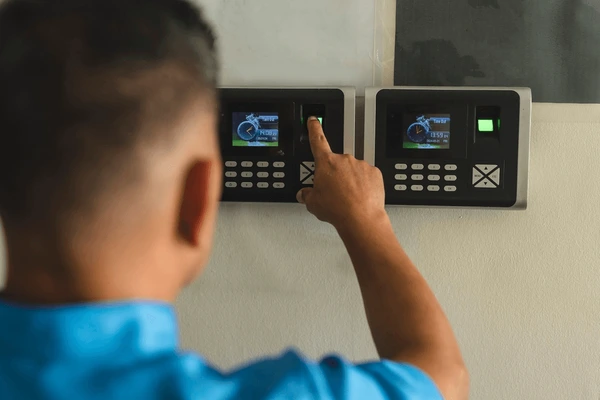
Accurate time tracking is the foundation of fair payroll, labor compliance, and operational efficiency. As businesses move away from manual attendance registers and outdated punch cards, biometric time clock systems have emerged as a reliable and secure solution. These systems use unique biological identifiers to ensure precise employee time tracking while reducing payroll errors and time theft.
In this guide, we explain how biometric time clocks work, their benefits, security considerations, and why industries such as construction increasingly rely on biometric time clock software for workforce management.
How Biometric Time Clock Systems Track Employee Attendance
A biometric time clock records employee attendance using unique physical characteristics rather than cards or PINs. Common biometric identifiers include fingerprints, facial recognition, and palm scans. When an employee clocks in or out, the system verifies their identity and records the exact time.
Unlike traditional methods, biometrics time clock technology ensures that each time entry belongs to the correct individual. This eliminates common attendance issues such as forgotten cards, shared PINs, or proxy clock-ins. The data is stored digitally and can be accessed in real time through centralized systems.
Accuracy and Reliability of Biometric Time Clocks
Accuracy is one of the strongest advantages of biometric time clocks. Traditional timekeeping systems rely heavily on employee honesty and manual oversight, which increases the risk of errors. In contrast, time clocks biometric systems authenticate users instantly and consistently.
Because biometric identifiers are unique, these systems significantly reduce discrepancies in recorded work hours. This leads to:
- More accurate payroll processing
- Fewer disputes over hours worked
- Improved compliance with wage and hour laws
For employers managing large or mobile teams, reliability is essential, and biometric solutions provide consistency across worksites.
Key Advantages of Using Biometric Time Clock Systems

Businesses across industries adopt biometric time clock systems because of the tangible operational benefits they provide.
Reduced Time Theft
Biometric verification prevents “buddy punching,” where one employee clocks in for another. Since biometric data cannot be shared, time theft is effectively eliminated.
Improved Payroll Accuracy
Accurate time data directly improves payroll calculations, including overtime, shift differentials, and compliance reporting.
Lower Administrative Workload
Automated attendance tracking reduces manual data entry and corrections, saving HR and payroll teams valuable time.
These advantages make biometric time clocks a long-term investment rather than just a tracking tool.
Data Security and Legal Compliance in Biometric Time Clock Software
Security is a common concern when using biometric time clock software. Modern systems do not store actual images of fingerprints or faces. Instead, they convert biometric input into encrypted templates that cannot be reverse-engineered.
From a compliance perspective, employers must:
- Inform employees about biometric data collection
- Store data securely
- Use data strictly for attendance and payroll purposes
Reputable biometric time clock systems are designed to align with labor laws and data protection regulations, ensuring ethical and legal use.
Preventing Buddy Punching with Biometric Time Clocks
Buddy punching is one of the most costly attendance issues for employers. Traditional punch cards and PIN-based systems make it easy for employees to clock in for absent coworkers.
Biometric time clocks solve this problem by requiring physical presence for clock-in and clock-out. Since biometric identifiers are unique to each employee, unauthorized punches are impossible. This single feature often justifies the transition to biometrics time clock solutions for many organizations.
Types of Biometric Technologies Used in Time Clock Systems

There are several biometric technologies used in modern biometric time clock systems, each suited to different work environments.
Fingerprint Recognition
The most widely used method due to affordability and ease of use.
Facial Recognition
Ideal for environments where hands may be dirty or gloved, such as construction sites.
Palm and Iris Scanning
Used in high-security or large enterprise environments where maximum accuracy is required.
Choosing the right time clocks biometric solution depends on work conditions, workforce size, and security needs.
Payroll and HR Integration with Biometric Time Clock Software
One of the biggest advantages of biometric time clock software is its ability to integrate seamlessly with payroll and HR systems. Attendance data flows directly into payroll platforms, reducing manual intervention.
Integration benefits include:
- Automated wage calculations
- Accurate overtime tracking
- Real-time labor cost visibility
For payroll professionals, this integration minimizes errors and ensures timely payments, especially in industries with complex pay structures.
Use of Biometric Time Clocks in Construction and Field Workforces
Construction and field-based industries face unique attendance challenges, including multiple job sites, rotating crews, and variable schedules. Biometric time clock systems address these challenges by providing consistent and verifiable time tracking.
Mobile-enabled biometric devices allow workers to clock in on-site, while cloud-based systems give managers real-time access to attendance data. This improves accountability and simplifies payroll for distributed teams.
In such environments, biometric time clocks are not just convenient; they are essential for compliance and efficiency.
Biometric Time Clocks vs Traditional Time Tracking Methods
Traditional time tracking methods include paper timesheets, punch cards, and PIN-based clocks. While inexpensive initially, these methods often lead to inaccuracies and administrative burden.
Time clocks biometric systems outperform traditional options by offering:
- Higher accuracy
- Enhanced security
- Reduced fraud
- Better scalability
Over time, the efficiency gains and cost savings outweigh the initial setup costs of biometric systems.
Cost Considerations for Biometric Time Clock Systems
The cost of biometric time clock systems varies depending on:
- Hardware type
- Number of users
- Software features
- Integration requirements
While upfront costs may be higher than traditional systems, the return on investment is realized through reduced payroll errors, minimized time theft, and lower administrative overhead.
For small and medium businesses, scalable biometric time clock software options make adoption affordable and practical.
Final Thoughts
Workforce tracking is no longer just about recording hours; it is about accuracy, accountability, and compliance. Biometric time clocks provide a modern solution that addresses these needs effectively.
From preventing buddy punching to integrating seamlessly with payroll systems, biometric time clock systems offer long-term value for businesses of all sizes. As industries continue to evolve, adopting reliable biometrics time clock technology is a strategic step toward smarter workforce management.
Frequently Asked Questions
1. Can biometric time clock systems work without internet access?
Yes. Many biometric time clock systems can store attendance data offline and automatically sync once an internet connection is restored, making them reliable for remote or temporary job sites.
2. Do biometric time clocks slow down employee clock-ins?
No. Modern biometric time clocks authenticate employees in seconds. In high-traffic environments, they are often faster than card-based or PIN-based systems.
3. How long does it take to implement biometric time clock software?
Implementation typically takes a few hours to a few days, depending on workforce size, device setup, and payroll integration requirements.
4. Can biometric time clocks handle shift-based and overtime tracking?
Yes. Biometric time clock software is designed to support multiple shifts, overtime rules, and custom pay policies, ensuring accurate payroll calculations.
5. What happens if a biometric scan fails?
Most time clocks biometric systems include backup options such as secondary biometric scans, supervisor approval, or temporary PIN access to ensure uninterrupted attendance tracking.